May 2, 2023
My name is Laura Clark.
I am 34 years old.
I am a writer, a manager, a teacher, a friend, a lover of art, a friend to animals, a lifelong Michigander, an INFJ, and an advocate for mental health awareness.
I have Borderline Personality Disorder.
Between BPD and a sprinkling of other conditions that I’ve been blessed with in this lifetime, I have spent many years trying to blaze my own trail in life, both within and outside of the confines of my diagnoses. For that reason, I felt it appropriate to kick off this series of posts with my own story.
Today, I want to talk specifically about how I got to where I am right now – writing this post that you’re reading. I’m going to share how I arrived at the place where I felt compelled to share my story, and open up what I hope will be a very candid conversation about the way we view and address openness about mental health.
Looking back, ever since I was a child, I always felt “wrong.” Dysfunctional, broken, damaged… whatever you want to call it. I’m sure a lot of you can relate to that in some way or another. It started when I was around 6 or so (maybe earlier?), and adults around me started to notice that I just had… a LOT of unusually strong emotions for someone so young. And because I had a lot of unusually strong emotions, those emotions were often difficult to keep contained. So they started spilling over the edges, and into my daily interactions with the people in my life – both adults and my peers. I could never quite pinpoint what was causing the emotions, and could never quite find a way to curb them. Perhaps I had a trauma I don’t remember, or perhaps this was just how my brain was programmed. Regardless, I realized over time that this was just how I was. So I just learned to co-exist with these Very Strong Emotions™, some days better than others. It wasn’t always a peaceful co-existence, granted, but at least I was surviving.
As I grew a bit older and entered my teen years, I figured out how to appear “fine” on the outside the majority of the time. Fine-tuning what I showed on the outside was an art, and I was a master of it. It also helped that I was pretty high-functioning, which masked a lot of my internal challenges. I had a 135 IQ, and was fairly artistic, creative, and well-spoken, so many people assumed that I was, in fact, fine, if not a bit tortured. But smoke and mirrors only lasts so long. Smoke eventually parts, and mirrors eventually crack. And oh boy, did mine ever, over time.
Around my mid to late teens, things hit critical mass. I had entered therapy several years earlier, at the suggestion of my parents, to try to get to the root of why I was always so unhappy, why that unhappiness manifested itself the way it did, and why certain situations were triggering for me. Several years, several thousand dollars, and three therapists later, I still had no answers. Things got really bad, and I entered inpatient therapy at 14. This would be the first of nine trips to inpatient clinics over the next half a decade for me, as I tried desperately to get ahold on and reign in the Very Strong Emotions™.
The years passed, simultaneously super quickly and excrutiatingly slowly. I continued my quest to try to get ahold on things, hitting every bump and pothole on the road to reach the elusive mental health Shangri-La I so coveted. Suddenly, I was 19 years old, and I had hit rock bottom. And not just any rock bottom, but the kind of rock bottom some of you are probably familiar with where there ain’t no ladder tall enough, helping hand long enough, or rescue force strong enough to extract you. The kind of rock bottom where you are the only person who can save yourself… which sounds like a would-be inspirational story, IF you can figure out how to get yourself out. Unfortunately, at that point, I had no idea how to do that. A lot of this was due to the fact that I hadn’t yet realized I didn’t need to “save” myself from my illness at all. But hindsight is 20/20. More on that later.
I’ll spare all the grisly details around what my life looked like when I hit that rock bottom point, but suffice it to say it was bad news bears for myself and anyone associated with me. I was like a human wrecking ball of sadness and pain: trying, ineffectively, to subtly navigate my day-to-day challenges, but crashing into everything and creating a commotion regardless. At a very high level, I was in an unhealthy, incredibly toxic relationship, estranged from friends, reeling from losses and deaths of people in my life in very short succession, already on the wrong medication to manage my conditions day-to-day, had dropped out of school… you get the idea. Anyone who has hit this type of rock-bottom before, whether due to depression, addiction, trauma, or any other mental health or physical condition, will understand what I’m talking about here. It’s a feeling of sheer self-loathing, contempt, and hopelessness. You know you hate the track you’re going down, but it’s like you’re a conductor with no control over the train. Your emergency brakes have malfunctioned, you’re going the wrong way, you’re barreling toward a cliff… and you’re powerless to stop any of it, even though you’re the f***ing conductor, and it’s your job to drive the train.
“But wait! You’re not completely powerless!” says our society. “Go! Get outside! Get some fresh air! Go out with your friends! Get up and dance to music! Eat more protein and fruits and veggies! Do what makes you feel alive!”
These are all admirable suggestions, but they’re also exactly where we miss the boat when it comes to how we handle discussions with each other about mental health. At the risk of sounding a little hyperbolic, it’s hard to motivate yourself to do what makes you feel alive when you already feel dead inside. In my case, when I hit this rock bottom point, my brain was already clocking overtime working against me anyway, which only served to amplify the guilt, shame, and sadness I felt. Basically, I was at the point where I was in so deep that I needed to find a way to motivate myself to feel motivated to motivate myself… like some sort of weird, motivation inception. I hadn’t even gotten up off the couch, showered, or eaten a veggie in half a week. How could I (or anyone else) expect myself do anything more?
So my brain kept thinking and thinking, as brains are wont to do… until it finally just doubled down, took all those lovely thoughts, and turned them on me. It might not have had the energy to do anything else, but my brain sure seemed to have a lot of energy when it came to making me feel bad about myself and my current predicament. “You’re a failure!” it would shout at me from inside my own head. “Look at you – you’re not even able to get up out of bed. What will your friends think? You’re so lazy. You can’t even get up to go to school or work! You’ll never be anything.”
When our brains sabotage us this way, it makes day-to-day existence very difficult. Now pile on the fact that it’s hard to speak openly about these kinds of things. You feel ashamed. Embarrassed. Useless. And then suddenly it hits you: at some point while you were busy trying to motivate yourself to feel motivated to motivate yourself, and stuffing your emotions down so everyone around you wouldn’t notice you were crumbling, your train spiraled out of control.
This is where I was when things hit critical mass. I entered inpatient treatment for the last time at a new facility, a last ditch effort to see if I could find a way out of the rock bottom pit I had been nesting in for months. It was a risk, and I was tired. So tired. But it was worth just one more shot…
It’s been 15 years. A decade and a half since then. That one more shot worked. I was properly diagnosed, figured out how to get my life on a better track, and clawed my way toward that dim but promising little light shining through the very top of that rock bottom ravine until I finally made it out.
This is not an “ultimate success story” kind of post though. I am not “cured.” I never reached that mental health Shangri-La I kept coveting. But it’s not because I failed. It’s because it never existed. Mental illness comes in seasons… in waves… and mine is not curable regardless. But I do manage it – always. I still suffer inside. Every single day. But I’ve learned to accept, work with… even befriend my condition and use it to my advantage in a lot of instances. By better understanding it, I better understand myself.
I’ve had people say to me, “I never would have in a million years thought or known that you dealt with this.” To that I say, that’s all the more reason I should share it. 1 in 5 people struggle with mental illness. Most don’t talk about it, often because they don’t feel comfortable to do so. We haven’t de-stigmatized mental illness like we’ve de-stigmatized physical illness. If someone has cancer, that doesn’t inform our opinion of who they are, or how they are. We just say, “Oh no! That must be awful. How can I help?” The same needs to be true of how we perceive mental illness. 1 in 10 people with my condition, BPD, die of suicide. Other mental illnesses have similarly alarming fatality statisitics. I don’t want to see anyone become a statistic, when they could have been supported by a community of people who made them feel comfortable to talk. We need to be those people. We need to be that change. And that’s what I want to talk more about here this month – how we can challenges ourselves and each other to do that.
That’s all for today. Thanks for reading, and see you tomorrow! Feel free to comment, or shoot me a PM if you want to chat at any time!
Laura

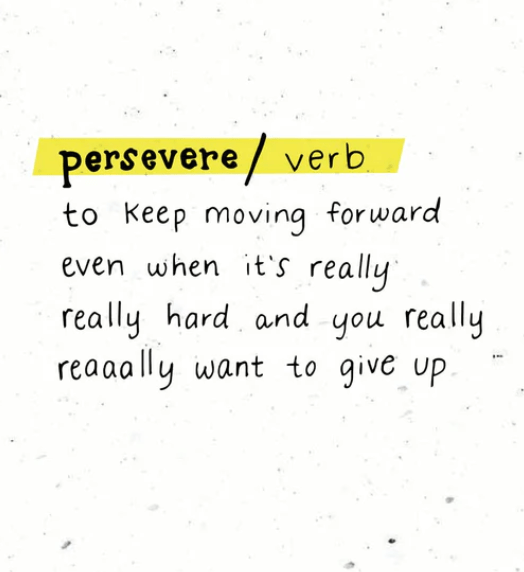


 Continue On
Leave a reply to Carole Zak Cancel reply