May 5, 2023
On Mental illness and Ableism:
I don’t have bipolar disorder, but I have a handful of friends and family members who do. For that reason, I’m fairly familiar with how the illness looks and manifests, as well as how to identify the symptoms. The extent of my familiarity with them is also in part largely due to the ridiculous amount of research I’ve done on the topic. This was at a time when several doctors I was seeing were convinced I had Bipolar I Disorder myself (side note – did you know there are two different types of Bipolar? Read more about the differences here! https://www.healthline.com/health/bipolar-disorder/bipolar-1-vs-bipolar-2#bipolar-1-vs-bipolar-2). This was at a time where Google capabilities weren’t quite what they are now, so I read a lot of books and visited very specific sites on the internet to learn more about why I struggled in the way I did. I was determined to understand why, despite having great friends, wonderful family, and an overall pretty good life, I always felt a little empty.
All this was at the pinnacle of a big positivity movement, and I’d often hear things like, “Why are you ungrateful? You have a great life. Enjoy it! Get out and get some sunshine. Smell a rose. Take a run around the block! Put a smile on!” from people who… didn’t quite understand. Not that I fault them – they thought they were helping, being supportive. The problem is that, as humans, we’re all really good at thinking in black and white. A lot of that is just evolutionary programming, but hell, why not anyway? It’s so much easier and requires less critical thought to place things in one bucket or the other. It simplifies life to not always feel like we have to force ourselves to look situations on a continuum. Instead, just place them in the appropriate bucket. Something’s good, or it’s bad. You’re happy, you’re sad. It’s sunny, it’s rainy. Turn that frown upside down. Now it’s a smile. Great! We’re all speaking the same language. Happy, sad, good, or bad. Everyone knows what those terms mean. We all understand each other.
Objectively, anyway.
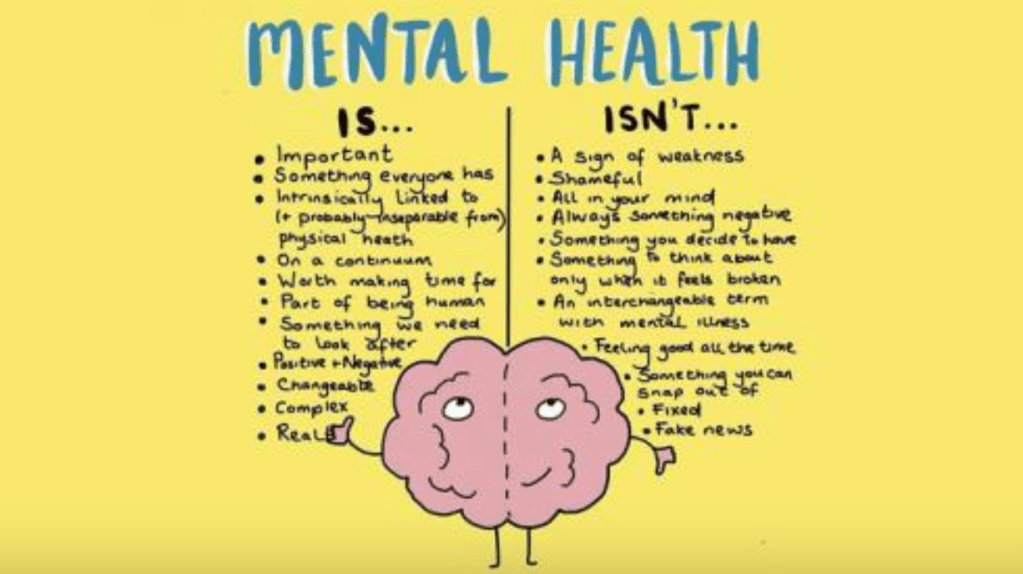
Subjectively, our definitions for good, bad, happy, sad, etc. differ from person to person, and this holds especially true when you throw someone’s mental illness or neurodivergence into the mix (more on that term in a moment). My happy is different from Jim’s over there. And my sadness – what makes me feel it and HOW I feel it – is different from the person’s on the other side of the room, as well. But that gets overlooked when we don’t leave room for nuance in the way we assess situations. What we’re REALLY asking each other is not, “are you happy?” or “are you sad?” in your OWN experience. It’s asking, “are you happy or sad according to an arbitrary, objective definition, and according to the way our society thinks “normal” people “should” feel?” We see other people’s behaviors through the lens of how society has trained us to judge and classify them, as well as through the lens of our OWN experience. We add our own context, regardless of how accurate it is (or isn’t), and then we draw our own conclusions. That is true of everyone, and the only way to break ourselves of it is to build an awareness. The only way to break ourselves of it is to talk, to ask, versus just assuming our definitions of various emotions, situations… anything really… align with one another’s.
So yeah, you’ve got the black and white, objective definitions we use without much thought, and the fact that the majority of the time, even when we think we’re on the same page as someone, it’s likely that we’re actually talking past each other. And from where I stand, those are JUST the foundational catalysts for us not understanding each other’s pain more deeply. We’re kinda inherently programmed not to. But THEN, you layer on miseducation, apathy, general hostility, etc., and it starts to paint a real clear picture of why mental health misconceptions are so pervasive. When we assume we’re all speaking the same language, it absolves us of any responsibility to look deeper and meet someone else where they’re really, truly at. And when we give ourselves permission to be apathetic about the experiences of others around us, or even go a step further and act in a hostile way, it makes things really messy.
Returning to my own story, at the point in time when I was dealing with trying to research my (alleged, at the time) diagnosis, and trying to get to the bottom of why I was always feeling so damned miserable, there were already a great number of misconceptions and not super politically correct ways of labeling things. To further contextualize, it was a time when slurs like “psycho,” “retard,” and “gay: were all commonly used. (Positive side note: while those are still not completely gone, we’ve made a huge improvement in pulling back on the use of terms that make certain conditions or identities synonymous with “bad,” “stupid,” or “abnormal.” We do seem to hold each other and ourselves farrrrr more accountable for those kinds of things now than we did in previous times. And that’s a huge deal).
In my situation, when I allowed myself to be vulnerable enough to share a doctor’s assessment of my condition with someone I knew or thought I could trust, it often ended up backfiring on me. At whatever point the person and I had an argument, or they didn’t like something I did, they would eventually turn what I had shared against me. Comments like, “You’re just being bipolar – you said you are yourself!” or “You’re not thinking straight. It’s your bipolar. Come back and let’s talk when you’re not being crazy” would come out of the woodwork eventually. Today, there’s a term we use more broadly (although it’s actually an older term) to call out that type of antagonization and weaponization of someone else’s state of mind: Gaslighting. If it happened today, I would be able to see the forest for the trees, so to speak. But at that point, as a teenager already struggling to accept ownership of my condition, comments like that just sent me spiraling into repeated cycles of self-loathing and doubt.
One thing experiences like that have taught me is that there are really only four types of people we will meet (or will decide we want to be ourselves) when it comes to comments made around mental health:
- The people who care, and try their best to know more and be supportive (the advocates)
- The people who care, don’t know how best to be supportive, but are often open to learning more (the well-meaning folks)
- The people who know but don’t care much about supporting or learning more (the apathetic folks)
- The people who just act like a**holes (I think this one’s pretty self-explanatory)
The first and second classes of people, we’ll talk more about in a later post. Here, I want to focus on categories three and four. To do that, let’s dive briefly into the concepts of ableism and neurodivergence.
The terms “ableist” and “neurodivergent” are descriptors that have been around for awhile, but have really entered mainstream discourse only fairly recently. For anyone unfamiliar with these two terms, I’ll briefly define them.
Ableism is discrimination and social prejudice against people with physical or mental disabilities and/or people who perceive themselves as being disabled. Ableism characterizes people as they are defined by their disabilities and it also classifies disabled people as people who are inferior to non-disabled people.
Neurodivergent is a non-medical term that describes people whose brains develop or work differently for some reason. This means the person has different strengths and struggles from people whose brains develop or work more typically.
The reason ableism as an identifier is cool is because allows us to identify when someone’s mental (or physical) illness is being weaponized against them. And I’m a huge advocate of putting clear labels (to be clear, when I say labels, I mean medical labels, not insults or slurs) on health conditions and concepts for two reasons:
- As people, we do have the power to recognize that we are more than a label, but still own and appreciate that label as an identifier that can help us find necessary and useful resources (like in the case of my BPD diagnosis, or even in the event of a physical illness we need specific treatment for). The label can actually take the weight, the burden, off of trying to make sense of what’s going on. In a lot of ways, it allows us to let go.
- Clearly defined labels help us hold ourselves, and each other, accountable as mental heath awareness allies by helping us to better understand the positive impact we can have – or the damage we can do – by referencing conditions improperly or weaponizing them.
I’ll pause here to say that I appreciate the sentiment of many people that say, “We shouldn’t put labels on things.” I genuinely understand that stance because I held it myself for many years. But at the end of the day, I would argue that labels can actually help us far more than hurt us, as long as we understand how to use them wisely. By talking to each other, and by doing our own research, we can work to align with each other on what is appropriate, and what is ableist. We can identify when harmful terms, slurs, or ignorance are being perpetuated, and we can challenge ourselves and each other to do better.
When we look at ableism and neurodivergence, we really have to make sure we look at them as very narrow, defined concepts that serve the purposes I outlined above. Returning to the black and white thinking I talked about earlier, it’s important to recognize all the nuance that exists under these classifications, including types of conditions and diagnoses, and all the situations, symptoms, and challenges that fall underneath each.
It’s a lot. There’s not enough time in one lifetime to research and get familiar with all of that. That’s OK. Because we can talk. We can ask. We can open up discussions with each other to try to understand the ways we can empower and validate each other, rather than being unintentionally ableist.
No one is perfect. Every single one of us will miss the mark. Most likely multiple times. There’s no shame in that. If we did our best, all we need to do is apologize for hurting someone, or perpetuating anything incorrect that we’ve said. Then, we can allow ourselves to be educated, so we can do better next time, and then keep getting better and doing better.
It’s been nearly two decades since the events of the story I told above. I have been a loud, unapologetic advocate for mental illness since my early 20s. Yet I can still count many times in the relatively recent past where I shared my story, my mental illness, and the challenges that I’ve faced with people who said they understood, but later weaponized it against me when they were unhappy or angry with me, or didn’t like what I was doing. There are times it has been painful – I won’t sugarcoat it or act like I’m unable to get my feelings hurt just because I own my illness. But generally, people are supportive of what I’m trying to do, and my mission here. And that’s because they WANT to be. That gives me hope for everyone who struggles with mental illness but is afraid to talk about because people can be mean, judgemental. Ableist.
I own my diagnosis, and that’s stronger than any words anyone can ever use to try to cut through me. I’ve built a very thick skin, and there are very few comments about it anymore that can really throw me off balance. But it was a LONG journey that I took to get me here. And I, for one, want to support anyone else ready to make that journey of acceptance and self-celebration by being an advocate, ASKING when there’s something I don’t know, and taking ownership if I ever miss the mark. And that pertains not only to mental illness (even though that’s the subject of this series), but to every condition or struggle that someone may have. A genuine effort and desire to understand and support each other is, in my opinion, is the best give we have to give.
See you in our next edition.
With respect and support,
Laura


Leave a Reply